Three blocks over 26 million scam calls as sophisticated fraud rises
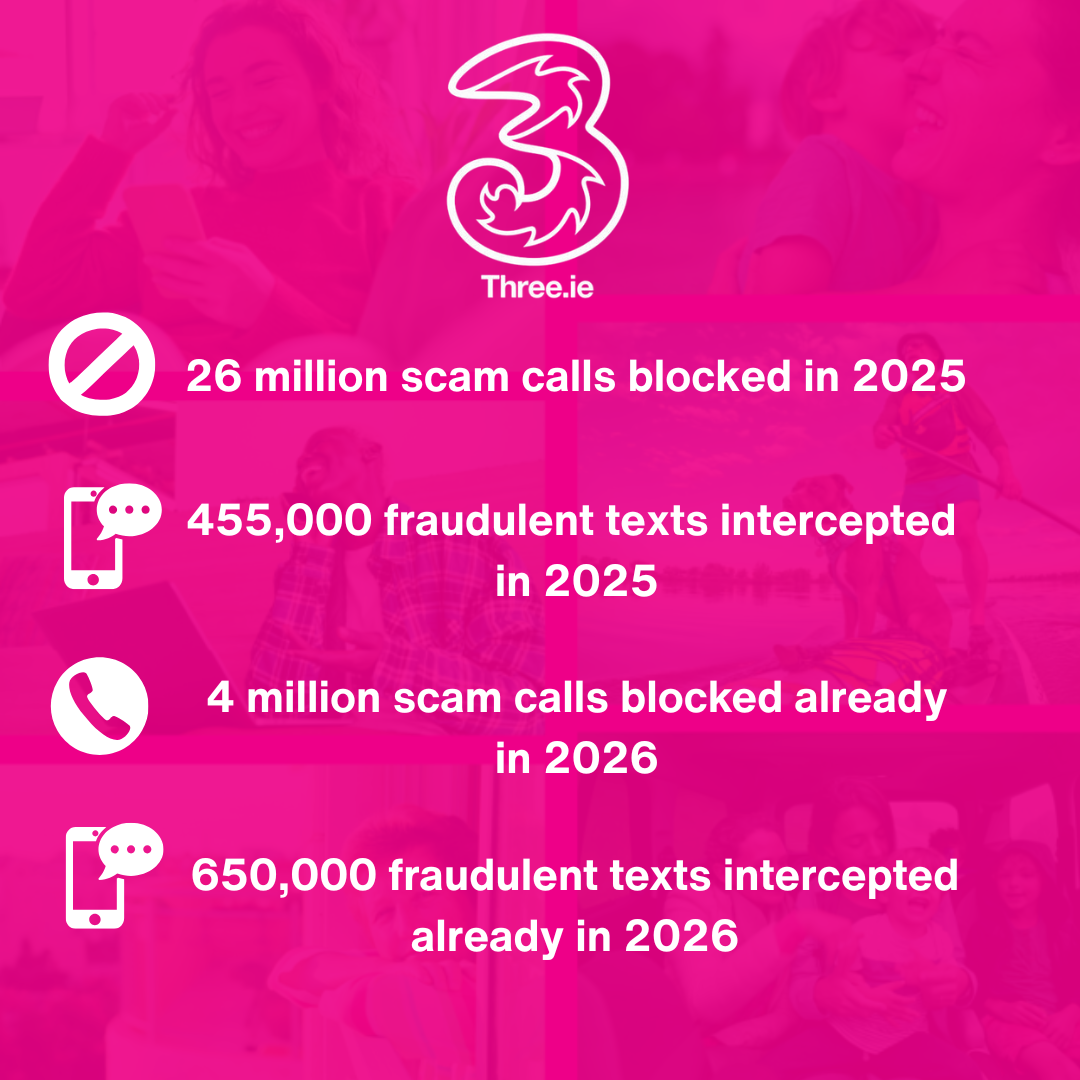
25th June 2026 – Three Ireland has revealed that it blocked more than 26 million suspected scam calls and intercepted over 455,000 fraudulent SMS messages in 2025, highlighting the continued steps being taken to combat telecoms fraud affecting customers across Ireland.
So far in 2026, Three’s fraud team has already blocked over 4 million scam calls and intercepted more than 650,000 fraudulent text messages, underlining the sustained volume of scam activity targeting consumers.
The figures reflect a broader, industry-wide challenge, with fraudsters continuously evolving their tactics to target customers through both phone calls and text messages.
Fraud and economic crime in Ireland have risen sharply, with An Garda Síochána reporting a 137% increase in fraud offences in 2025, driven by both the growth of online scams and improvements in reporting and detection.
With fraud activity typically increasing during the summer months, Three Ireland is urging customers to remain vigilant as scammers adopt increasingly sophisticated and targeted approaches.
On a single day alone — Friday, May 8th 2026 — more than 27,000 scam calls were blocked on Three’s network alone, while over 5,000 suspicious calls were flagged to customers with a “possible scam” warning, illustrating the scale and intensity of attempted fraud activity.
Fraud tactics continuing to evolve
While traditional scam texts and emails remain in circulation, there is a growing shift towards more sophisticated call-based and social engineering scams, where fraudsters attempt to manipulate customers into sharing sensitive information in real time.
A typical scam might involve a customer receiving a call from what appears to be an Irish mobile or landline number, with the caller falsely claiming to be from their provider. They may create urgency — for example, relating to an account issue or a promotional offer — and attempt to obtain security codes or personal details.
Fraudsters are increasingly:
Impersonating trusted organisations, including telecoms providers
Using numbers that appear legitimate or familiar
Creating pressure during live interactions
Attempting to gain access to accounts through social engineering
Protecting customers at scale
Three Ireland continues to invest heavily in fraud detection and prevention, including:
Network-level call filtering and blocking technologies
Real-time monitoring of suspicious activity
Automated detection of spoofed numbers
Intervention to cancel unauthorised activity before impact
Recent enhancements, including expanded blocking of spoofed international numbers, are contributing to high levels of fraudulent activity being intercepted across the network, as Three continues to strengthen its response to increasingly sophisticated threats.
These measures form part of broader, industry-wide efforts, including collaboration with ComReg and cross-sector partners, to combat evolving fraud risks.
Commenting, Tom Kinsella, Chief Consumer Officer at Three Ireland, said:
“Scam calls and messages are becoming increasingly sophisticated, and unfortunately more common. Blocking over 26 million suspected scam calls last year demonstrates both the scale of the challenge and the effectiveness of the protections we have in place.
We continue to invest in our network and systems to proactively detect and block fraudulent activity, while working across the industry to tackle this growing challenge.
While we intercept large volumes of suspicious activity, vigilance remains key. Customers should always be cautious of unexpected calls or messages and never share personal or account information, including one-time security codes.”
Customer Advice
Three Ireland is encouraging customers to:
Be cautious of unexpected calls or messages
Never share account details, passwords, or one-time codes
If you suspect someone is impersonating Three, hang up and contact Three directly using official channels
Report suspected fraud to An Garda Síochána
Further advice is available at Online Safety Support.